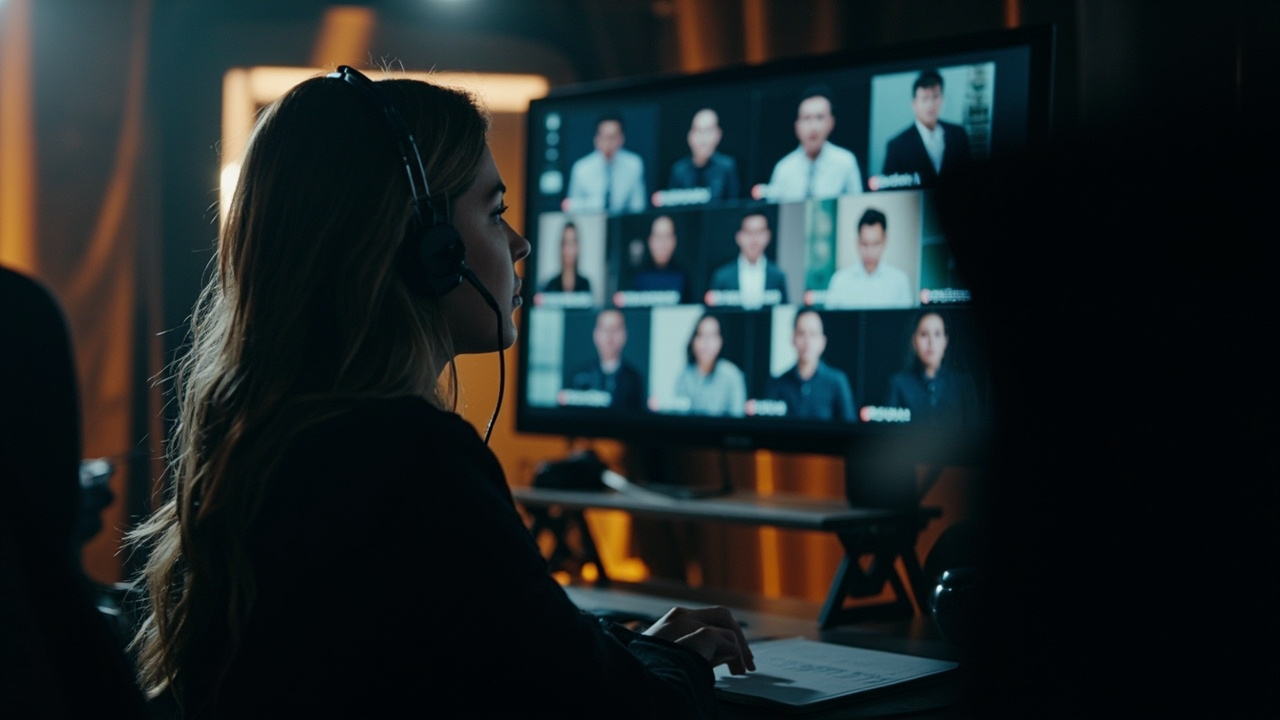
Five years ago, casting a multilingual voice over for an international campaign meant coordinating with agents in multiple countries, managing timezone differences, waiting for physical recording sessions, and hoping the delivered audio met the standard when it finally arrived.
That world is gone. And yet many production companies and brands are still working as if it isn't.
This guide is for casting directors, producers, and creative leads who need to cast multilingual voice over for international productions — and want to know what's changed, what's still true, and how to do it efficiently without sacrificing quality.
What Has Changed
The infrastructure for remote voice recording is mature. Source-Connect, Zoom, Cleanfeed, ipDTL — these platforms are standard in the professional voice over industry. A talent in Madrid can record a live-directed session with a producer in Berlin or São Paulo with the same technical quality as a studio in Los Angeles.
The catch: not all voice talent has a professional setup. The presence of a good microphone and an internet connection doesn't mean the audio meets broadcast standards. Knowing what to look for — and how to verify it — is part of what this guide covers.
Step 1: Define Your Language and Accent Requirements Precisely
The most common mistake in multilingual casting is vague language specification. "Spanish voice" isn't a brief. Neither is "English voice for international market."
Before you start looking for talent, specify:
- Language variant: Castilian Spanish (European) vs. Latin American Spanish — which regions, which variants? For pan-European use, Castilian is typically the standard. For US Hispanic markets, Mexican or Caribbean variants may be appropriate. If you don't know, ask — that's what a good voice actor or casting specialist helps you determine.
- Accent requirements: Do you need International English (neutral) or English with a specific accent? "International English with Hispanic accent" is a specific profile — not a generic "Spanish accent."
- Target audience: Who's listening? A corporate training for internal use in Germany has different requirements than a consumer ad running in Mexico City.
- Tone and register: Formal or conversational? Warm or authoritative? These decisions affect which voice fits the project.
Step 2: Find the Right Talent, Not Just Any Talent
The global voice over market is vast. Platforms like Voices.com, Voice123, and similar marketplaces list thousands of voice actors in every language. But volume isn't the issue — quality and specificity are.
What you actually need:
- Talent with documented experience in your specific category (commercial, corporate, film ADR, e-learning, gaming)
- A professional studio setup that meets broadcast standards — not just a decent microphone in a spare room
- Remote recording capability — Source-Connect at minimum, with verified connection quality
- Evidence of premium brand work (luxury brands, international campaigns, film/TV credits)
- Fast turnaround capability for urgent projects
The shortcut is simple: look at the client's roster. If someone has worked for Lancôme, Armani, Coca-Cola, or Apple, those brands have already vetted the quality. That's a more reliable signal than a demo reel and a profile on a marketplace.
Step 3: Conduct the Session Remotely
Once you've selected your talent, the live-directed session is straightforward — assuming both sides have the right setup. Here's what to confirm before booking:
Pre-session technical checklist
- Talent confirms Source-Connect or preferred platform availability
- Talent provides a test recording to verify audio quality before the session
- Session confirmed with enough time for a sound check (15-20 minutes before recording)
- Director or producer has fast, stable internet connection (minimum 20 Mbps upload)
- All parties in compatible time zones or scheduled with buffer time for any overlap issues
The session itself works like any studio recording — the director communicates with the talent in real time, adjusting reads, tone, and pacing. The difference is that both sides are in their own studios rather than the same room. Modern remote recording infrastructure makes this functionally equivalent to in-person direction.
Step 4: Review and Delivery
Professional voice talent delivers clean, edited audio — not raw recordings requiring post-production correction. Expect:
- Broadcast-quality WAV files (44.1/48kHz, 16/24-bit)
- Clean edits with no mouth sounds, clicks, or ambient noise
- Multiple takes of key lines, organized clearly
- Fast turnaround — same-day delivery available for urgent projects with most professional talent
If the audio arrives and needs significant post-production work, that's a quality signal that something went wrong in the selection or session process. Good talent delivers recording-ready audio.
Common Mistakes to Avoid
Choosing based on rate alone
The cheapest voice option is rarely the most cost-effective when you factor in re-takes, audio correction, and the risk of needing to recast entirely. Premium voice talent costs more per project — but delivers faster, cleaner, and with fewer revisions.
Generic briefs
"We need a Spanish voice" is not a brief. The more specific you can be about language variant, target audience, and tone, the better the outcome. A talented voice actor can adapt their delivery to your exact brief — but they need to know what that brief is.
Skipping the test recording
Before booking a large project, ask for a short test recording against your actual script or a representative sample. This eliminates surprises on the day of the session and confirms that the talent's setup and delivery match your expectations.
Assuming all remote setups are equal
There's a significant quality gap between a professional studio setup (Neumann U87 or better, proper acoustic treatment, Universal Audio or Apollo interface) and a decent microphone in a treated room. Ask for the specifics. A professional will be transparent about their equipment.
The Bottom Line
Casting multilingual voice over remotely is not harder than casting locally — it's often simpler, because it gives you access to the best talent regardless of geography, without the logistics and cost of travel or physical studio time.
The key is knowing what questions to ask, what quality signals to look for, and how to define your brief precisely enough that the talent you select can deliver exactly what the project needs.
Done well, remote multilingual casting is faster, more flexible, and more cost-effective than the alternatives — with quality that matches or exceeds what physical studio time delivered in the past.